BridgeBio Pharma has announced that new, independent and contemporary real-world evidence as well as phase 3 sub-analyses of acoramidis in transthyretin amyloid cardiomyopathy (ATTR-CM) were presented at the Heart Failure Society of America (HFSA) Annual Scientific Meeting (ASM) in Phoenix, Arizona.
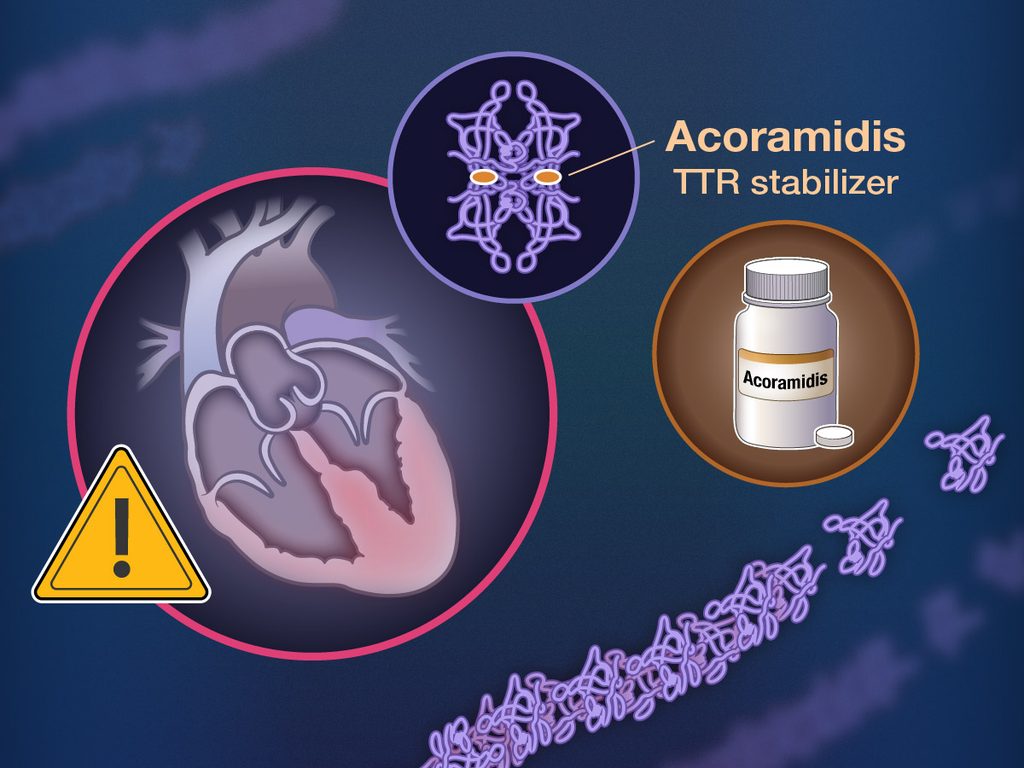
Acoramidis is the only selective small molecule, orally administered, near-complete (≥90%) transthyretin (TTR) stabiliser.
In a retrospective analysis conducted and presented by Dr Lanfear, individuals with ATTR-CM newly initiating acoramidis had lower rates of adverse cardiac outcomes than individuals newly initiating tafamidis.
The study leveraged data from Epic COSMOS, the largest U.S. electronic health record database, with over 300 million patients.
This dataset includes detailed, anonymised clinical records captured in the course of routine patient care, such as laboratory values and medication records.
After matching, 910 acoramidis-treated and 1,774 tafamidis-treated individuals were included, with similar baseline characteristics across treatment groups. Key findings included:
- The composite endpoint of death, all-cause hospitalisation, new-onset atrial fibrillation, or diuretic intensification was significantly lower with acoramidis across all three analyses: unadjusted (HR 0.82; 95% CI 0.72-0.90; p<0.001), primary (18% lower risk; HR 0.82; 95% CI 0.73-0.93; p<0.01), and a sensitivity analysis adjusting for a combined standardised NT-proBNP and BNP variable where available (HR 0.84; 95% CI 0.72-0.97; p=0.02)
- Acoramidis-treated individuals had statistically significantly lower rates of hospitalisation than tafamidis-treated individuals, including a 27% lower risk of cardiovascular hospitalisation (HR 0.73; 95% CI 0.62-0.86; p<0.001), a 27% lower risk of heart failure hospitalisation (HR 0.73; 95% CI 0.62-0.87; p<0.001), and a 25% lower risk of all-cause hospitalisation (HR 0.75; 95% CI 0.64-0.88; p<0.001)
- Diuretic intensification, an early marker of disease progression, was 17% lower with acoramidis (HR 0.83; 95% CI 0.71-0.95; p<0.01). Diuretic intensification was defined as use of parenteral loop diuretics, initiation or dose-equivalent escalation of oral loop diuretics, or use of a thiazide-like diuretic
- Differences in death (HR 0.85; 95% CI 0.62-1.20; p=0.34) and new-onset atrial fibrillation (HR 0.88; 95% CI 0.68-1.13; p=0.31) numerically favoured acoramidis, consistent with the composite, but did not reach statistical significance, reflecting lower event counts and limited duration of follow-up for these longer-term endpoints. These endpoints will be reassessed as the cohort matures
- Kaplan-Meier time-to-event curves for the composite endpoint showed early and sustained separation between treatment groups over follow-up (p=0.0014)
- The consistency of the treatment effect across unadjusted, matched, and biomarker-adjusted analyses and across multiple clinical outcomes supports the robustness of the observed difference.
These findings in electronic health record data replicate and expand on the results of the first peer-reviewed, claims-based real-world comparative effectiveness study of TTR stabilisers in ATTR-CM, in which acoramidis was associated with a 34% reduction in a composite of clinical worsening events (diuretic intensification, heart failure hospitalisation, and mortality) versus tafamidis (p=0.046), supporting the reproducibility of the observed benefit across independent data sources and data types.