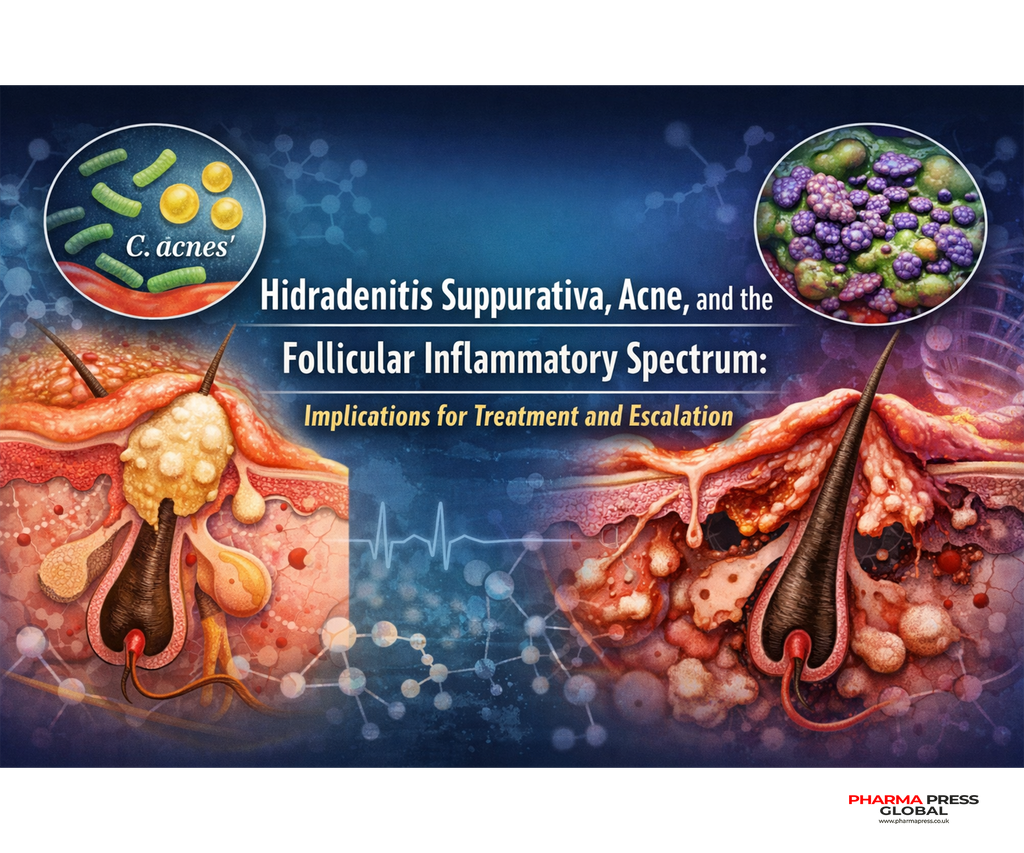
AbbVie has announced positive topline results from the phase 3 study evaluating the safety and efficacy of lutikizumab, an investigational dual-variable-domain interleukin (IL) 1α/1β antagonist, in adults and adolescents with moderate to severe hidradenitis suppurativa (HS). The study met its primary endpoint and eight ranked secondary endpoints.
In the study, patients treated with lutikizumab achieved significantly higher response rates for the primary endpoint of HiSCR75 at week 16 compared with placebo (31.4% versus 23.4%; p≤0.001).
HiSCR75 is defined as at least a 75% reduction from baseline in the total abscess and inflammatory nodule (AN) count, with no increase in abscess count and no increase in draining fistula count relative to baseline. This is the first phase 3 study including adults and adolescents with HS to demonstrate statistically significant HiSCR75 response rates at week 16 as the primary endpoint.
Lutikizumab also demonstrated statistically significant improvements across key ranked secondary endpoints, including rapid reductions in HS-related pain and significantly fewer HS flares, compared to placebo.
At week eight, 26.2% of patients treated with lutikizumab achieved NRS3, defined as at least a three-point reduction from baseline in HS-related skin pain on the Numeric Rating Scale (NRS), compared with 15.0% of patients receiving placebo (p<0.0001).
Improvements in NRS3 were reported as early as week one. In addition, at week eight, 36.0% of patients receiving lutikizumab achieved NRS30, defined as at least a 30% reduction and at least a two-unit reduction from baseline in HS-related skin pain, compared with 22.8% of patients receiving placebo (p<0.0001). Lutikizumab also significantly reduced the occurrence of HS flares during the first 16 weeks compared with placebo (18.4% versus 28.1% patients experienced flares; p<0.0001).
Additional improvements were observed in quality-of-life measures, including changes from baseline in the dermatology life quality index (DLQI) and hidradenitis suppurativa impact assessment (HSIA) (p<0.0001 for each). Key potential disease drivers, including IL-17A and IL-17F levels were also reduced over the double-blind 16-week treatment period. These findings reinforce the potential for lutikizumab to address the burden of disease for people living with moderate to severe HS.
The safety profile of lutikizumab was similar to prior studies, with no new safety concerns identified. Overall, treatment-emergent adverse event (TEAE) rates were similar with lutikizumab and placebo: any adverse event (AE) (53.4% vs 53.7%), any serious AE (3.0% vs 2.9%), and AEs leading to discontinuation (1.7% vs 1.9%), respectively.
The most frequently reported TEAEs associated with lutikizumab (≥ 3%) were nasopharyngitis, upper respiratory tract infections, headache, fatigue, and injection-site reactions. With the exception of injection-site reactions, their rates were similar to placebo. Similar rates of oral candidiasis were also observed between the lutikizumab and placebo groups (0.3% vs 0.4%, respectively).
There was no suicidal ideation observed in either the lutikizumab or placebo group. There were no deaths in the lutikizumab group; one death occurred in the placebo group.