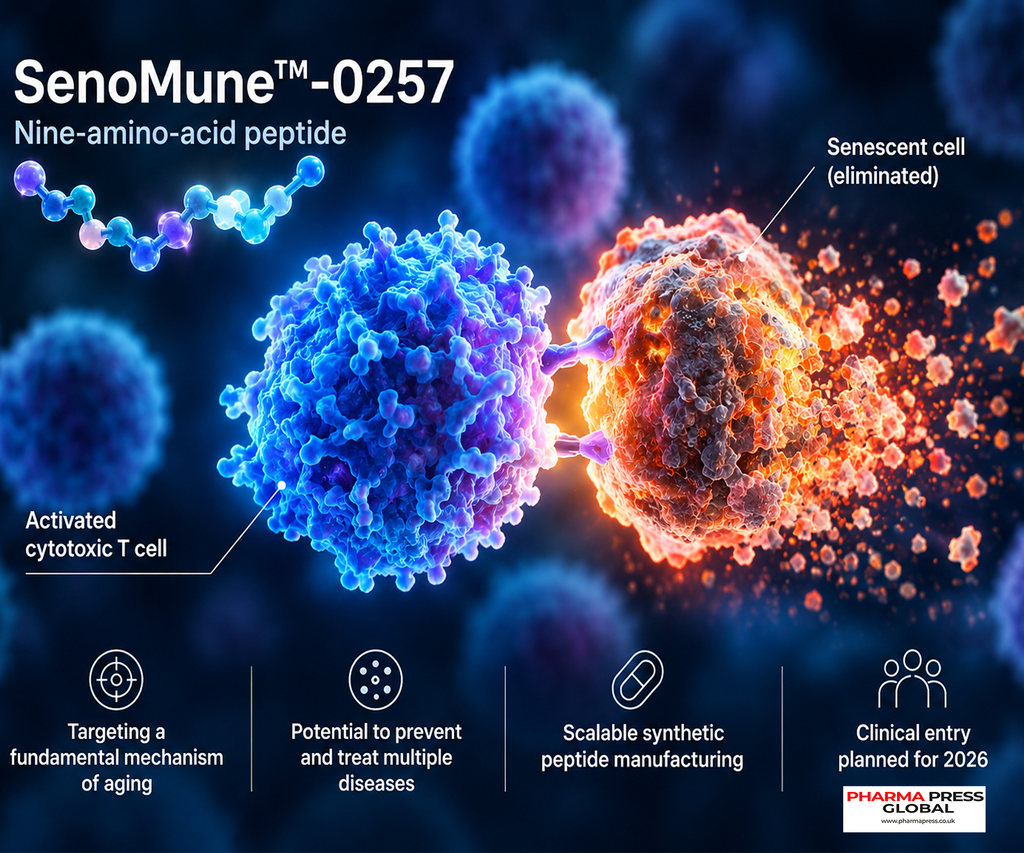
Immorta Bio, a biotechnology company pioneering therapies targeting fundamental mechanisms of aging, has completed preclinical studies for SenoMune-0257, an AI-designed peptide immunotherapy developed to restore the immune system’s ability to recognise and eliminate senescent cells. The company is preparing to advance this novel therapeutic candidate into clinical development in 2026.
One of the most significant discoveries in aging biology is that the accumulation of senescent cells, often called zombie cells, contributes to chronic inflammation, tissue deterioration, and the progression of numerous diseases.
Extensive preclinical research has demonstrated that eliminating senescent cells can produce substantial therapeutic benefits across experimental models of cardiovascular disease, liver and kidney dysfunction, pulmonary disease, fibrosis, neurodegeneration, and cancer. Landmark studies have also demonstrated improved physical function and extended lifespan in mice.
However, experimental small-molecule senolytics face challenges, including potential off-target toxicity and the inability to generate durable immunological memory.
Immorta Bio is pioneering a different approach, restoring the immune system’s ability to recognise and eliminate senescent cells.
Building on its published SenoVax research demonstrating tumour suppression and substantial survival extension in experimental cancer and accelerated aging models, Immorta Bio applied artificial intelligence to identify SenoMune-0257, a synthetic nine-amino-acid peptide designed to stimulate targeted immune responses against senescent cells.
This breakthrough transforms a complex cellular immunotherapy into a potentially universal, off-the-shelf pharmaceutical product, combining immune-mediated targeting with the simplicity and scalability of a synthetic peptide.
Preclinical laboratory studies demonstrated that SenoMune-0257 stimulates cytotoxic T cells capable of selectively eliminating senescent cells while sparing healthy cells under the conditions tested.
The candidate is designed to offer durable immunological memory and reduced off-target toxicity, while enabling simpler production and substantially lower manufacturing costs than personalised cellular immunotherapies.